
Nur ein kleines Lebenszeichen von mir.
Aber jetzt bin ich erstmal damit beschäftigt ein kleines Buch hier durchzulesen...
"I have always been a fan of science fantasy, in all its forms and definitions. Whether it be a combination of science fiction and fantasy (Expedition to the Barrier Peaks, Dreadstar, The Dying Earth), science fiction as fantasy (Claw of the Conciliator, John Carter of Mars), fantasy as science fiction (Gamma World, Star Wars) or anything in between, I love the genre-bending and breaking of it all. I love the boundary-free nature of science fantasy, which lets one’s imagination truly flow wild.
My favorite slice of science fantasy, I think, is science fiction as fantasy. This is where the technology is so advanced, at least in some aspects, that it seems like magic. As Arthur C. Clarke wrote, ”any sufficiently advanced technology is indistinguishable from magic.” For some reason, I actually find the idea of ultra-advanced technology more open-ended than magic for what it can do. More liberating. The knowledge that nanotechnology, gravity manipulation, and artificial building materials can create the landscapes found in a Roger Dean painting is somehow cooler than, “oh, it’s just magic.” Maybe it’s because making an island that floats in the air seems like such a colossal use of magical power, but if we’re talking about a civilization that could do it technologically, then it would be so advanced that doing so would be a small, almost artistic endeavor. It’s easier to imagine, for some reason.
Perhaps it comes down to that idea that having limitations actually encourages rather than discourages creativity. With magic, you can do anything. But with technology you can do almost anything. It’s that “almost” that is the key. Because you start asking, well, what can you do, then? And your imagination takes off. The limitations become a scaffold upon which to build, and if there are only a very few–if we’re talking about really advanced, ultra-tech here–then that scaffold allows you to build some really amazing stuff. But if there are no limitations at all, you can kind of freeze up. Or stagnate. You’ve nothing upon which to build. Obviously, this is not true all the time–I have certainly written about a lot of wild and weird magical stuff in my career, much of which I’m really proud of–but it can happen. (It’s also why fantasy writers and designers create “magic systems” so that there are rules and limitations even on magic.)
Lastly, I’ll mention that it is interesting to me that science fantasy offers a way to have wild, virtually-magical like stuff without the rest of the trappings of fantasy: the pseudo-Medieval world, for example, or the dudes with beards and pointy hats. The aloof, tree-loving elves and the dour, stone mining dwarves. Don’t get me wrong–I love traditional fantasy, but it’s nice to take a break from it awhile too. I guess this is kind of the flip side of the previous point, because these are limitations that traditional fantasy might have that science fantasy does not.
Far Future + Post-Apocalyptic
It should come as no surprise, then, that the game that I am working on is science fantasy. it takes place far, far in the future. You might say it falls in the “dying earth” mold of Vance, Wolfe, or Harrison, but the focus is a bit different. It’s also a post-apocalyptic sort of setting, with artifacts and structures of the past being very prevalent. But it’s not just one civilization’s ruins upon which the setting is built, but many. Due to the time scale dealt with, there has been opportunity for many civilizations to rise to great prominence and then eventually fall, recede, or evolve beyond comprehension.
These past great and advanced eras leave the world reshaped and utterly changed. And that’s the point. It’s a place so far in the future, so swathed in ultra-advanced technology, that anything is possible. But because that’s all the past, it’s still quite manageable.
Manageability is important for an rpg. It’s vital to think about the GM. In a game where everyone’s got ready access to all the ultra-tech they want, it’s really hard to manage the game. In a post-apocalyptic setting, however, the PCs have to earn their funky gadgets with weird powers. In a sense, the GM controls the flow of power just as she controls the flow of xp in most games (which in turn equates to power). Or, as a more direct comparison, consider the similarity between the post-apocalyptic setting and the traditional fantasy rpg setting. In both, the PCs wander about dangerous ruins looking for things that will increase their own abilities and power. And in both, it is traditionally the GM that determines what they might possibly find (although it’s ultimately up to the players where they look, and how they use what they find).
One interesting difference, however, is that in the fantasy setting, many of the treasures found can only be used by one person in the group. Or rather, it is one kind of person. Usually the wizard. But technology knows no such distinctions. So in this kind of set-up, if the group finds the strange device that can hurl blasts of green flame, any one of them can potentially wield it.
Another great thing about truly far-future post-apocalyptic settings is that artifacts of the past aren’t recognizable to the characters or the players. It can fun sometimes, and a bit funny, to play a game where your character finds a blender or a shotgun and has to pretend that he has no idea what it is, but that kind of irony can get old, in my opinion. In a far-future science fantasy setting, devices from the past are as mysterious as magic amulets and wands. In fact, probably much more so, because this is stuff that no one (or maybe virtually no one) alive can fashion. Or perhaps even catalog. There’s more room for mystery and strangeness in a world where it is impossible to define it all.
Lastly, this kind of setting is great for rpg campaigns because with the various bits of ancient tech and knowledge available, it is easy for a GM (or a designer) to create different locations with very different flavors. One isolated community might have recovered and mastered some device that produces energy golem slaves that do their bidding. An inhabitant of another might have stumbled upon some dangerous chemical or radiation that transforms the entire village into horrific monsters. Still another might worship some isolated artificial intelligence gone mad as if it were a god. In yet another locale, some eons-lost process might have turned everything to glass, and the inhabitants of the region must contend with this bizarre environment. Traveling across the face of this strange world provides the opportunity for any number of interesting scenarios and weird locations.
It Fits the Bill
In the end, what I wanted was a setting with wild possibilities. I wanted upside down cities, ships that sail across solidified oceans, creatures that exist on more than one level of reality at a time, and so on. I wanted the source of power to be strange and mysterious, and I never wanted that mystery to fade with regulation or definition.
I wanted the PCs to have access to some fraction of these wonders, but in a manageable way that didn’t overwhelm the GM. I wanted something where the GM had some say in how these wonders did or didn’t fit into the course of the game, to make sure that she was comfortable with it all. Where a GM can add in as much or as little weirdness as she wants, at the rate she wishes.
A setting with a rather simple society built upon the remnants of a vastly powerful (perhaps out-of-control) civilization seemed to make all of these requirements work. Characters live in a world where the craftspeople around them fashion simple garments of cloth and leather, and tools and weapons of iron. But they are also keenly aware that all around them are the ruins of civilizations that reshaped matter–both organic and inorganic. They know that the world is still filled with wonders crafted by mysterious people of the mist-shrouded past who routinely traveled to the stars and even to other dimensions. As they go forth to forge their own future, they have access to the mysteries of the past, at least if they can rise to the challenge and recover and master some of it. That, I think, is a setting where a lot of interesting stories can be told.
And that, in my opinion, is the key to a good roleplaying game setting."
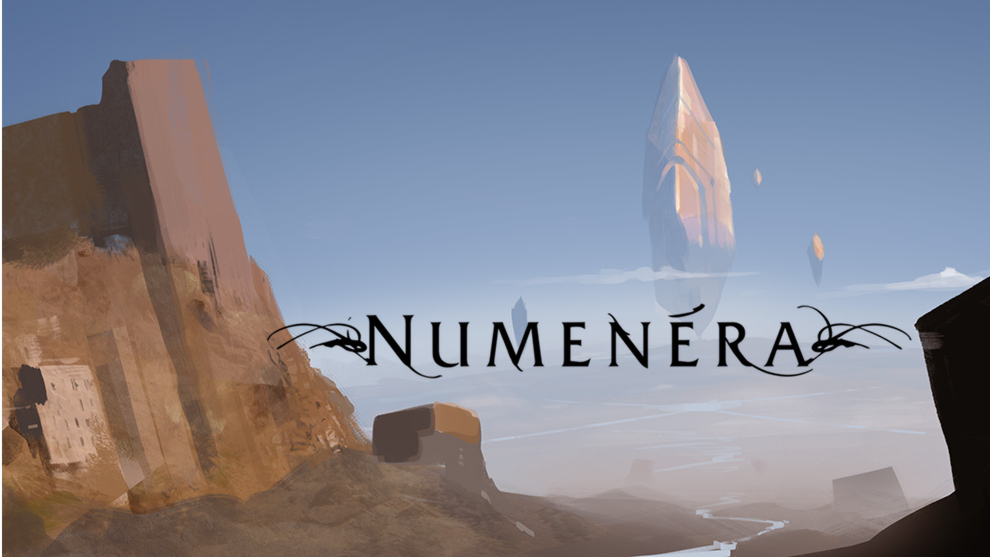
Numenera is set a billion years in the future. Civilizations have risen and fallen on Earth. Even though the current inhabitants live at about a Medieval level of technology, the leftover remnants of these advanced societies lie all around them. Some of these are extremely helpful: advanced tools, valuable means of communication and learning, transportation, defenses, and weapons. Others are dangerous: genetically altered monstrosities, flesh-warping radiation, creatures transplanted from distant stars, and clouds of out-of-control nanobots, just to name a few. This setting, called the Ninth World, provides all manner of opportunities and challenges to those that call it home.
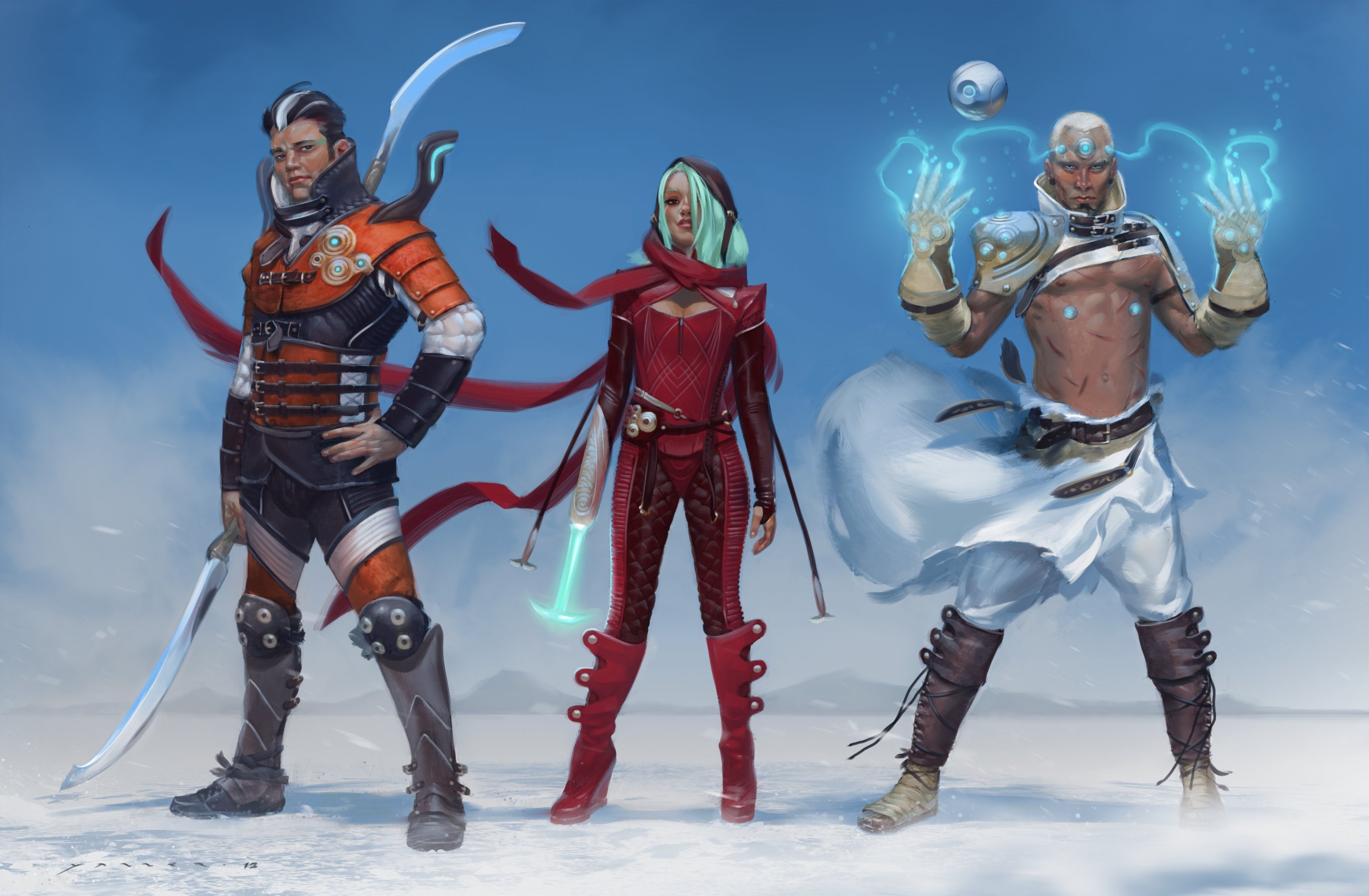

Thunderscape: the World of Aden introduces readers to the battered but unbroken world of Aden, a world where knights and sorcerers fight shoulder to shoulder with mechamagical golems against the nightmarish hordes spawned by the Darkfall, a supernatural cataclysm of unknown origin. Ten years ago, the sun was suddenly and unexpectedly eclipsed by an unknown force. Although the darkness lasted only a short time, in those long moments of false night, horrors beyond imagining sprang from every shadow. Beasts long destroyed, terrors that had only ever been imagined, and things that no sane mind had ever contemplated all became suddenly, violently real, and Aden burned. The nocturnals, as these beasts became known, slaughtered countless thousands and put an untold number of villages and cities to the torch. In one instant, the world of Aden was plunged into chaos and anarchy. Having known only peace for more than a thousand years, the nations of Aden were ill-prepared for this ruthless onslaught, and it seemed that the world of the mortal races would perish without ever knowing the cause. But the people of Aden are hardier than that. The world was in the throes of an industrial revolution, with magic and technology being tied together into a strange arcane art known as mechamagic. With this, and with the many other strengths brought to bear by the nations of Aden, the world fights back against the Darkfall and the nocturnals.
