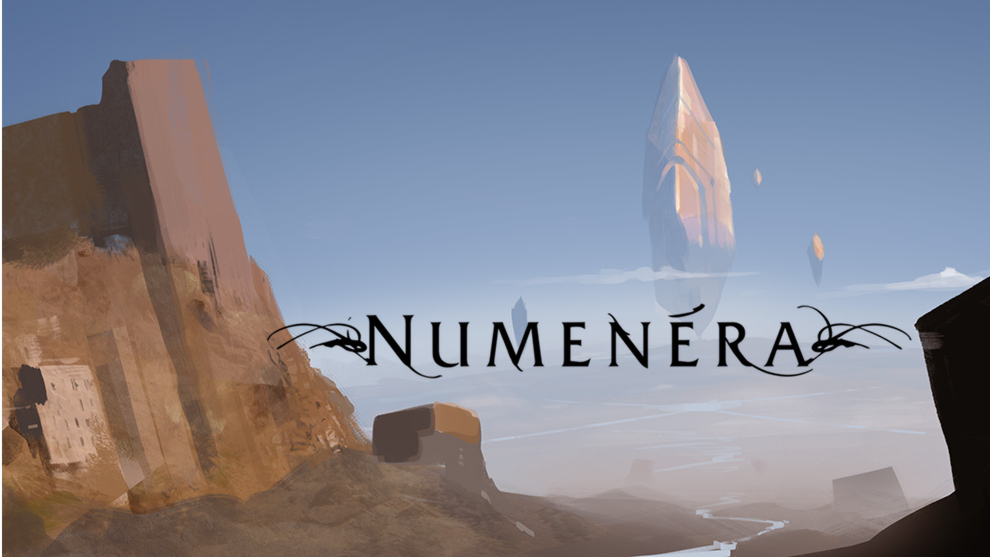
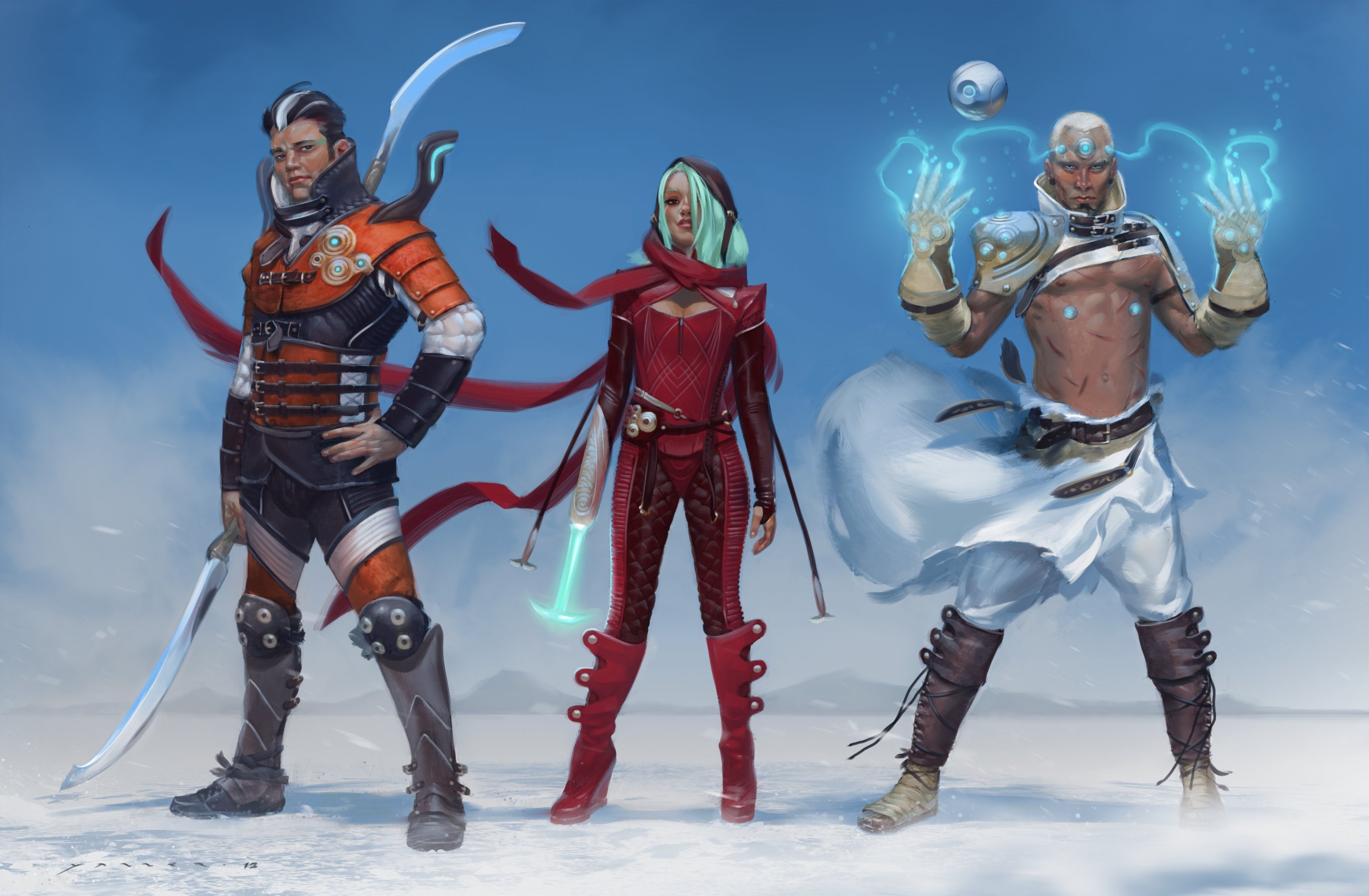
Dienstag, 7. Mai 2013

[Rollenspiel] Monte Cook über "Science Fantasy"

"I have always been a fan of science fantasy, in all its forms and definitions. Whether it be a combination of science fiction and fantasy (Expedition to the Barrier Peaks, Dreadstar, The Dying Earth), science fiction as fantasy (Claw of the Conciliator, John Carter of Mars), fantasy as science fiction (Gamma World, Star Wars) or anything in between, I love the genre-bending and breaking of it all. I love the boundary-free nature of science fantasy, which lets one’s imagination truly flow wild.

My favorite slice of science fantasy, I think, is science fiction as fantasy. This is where the technology is so advanced, at least in some aspects, that it seems like magic. As Arthur C. Clarke wrote, ”any sufficiently advanced technology is indistinguishable from magic.” For some reason, I actually find the idea of ultra-advanced technology more open-ended than magic for what it can do. More liberating. The knowledge that nanotechnology, gravity manipulation, and artificial building materials can create the landscapes found in a Roger Dean painting is somehow cooler than, “oh, it’s just magic.” Maybe it’s because making an island that floats in the air seems like such a colossal use of magical power, but if we’re talking about a civilization that could do it technologically, then it would be so advanced that doing so would be a small, almost artistic endeavor. It’s easier to imagine, for some reason.

Perhaps it comes down to that idea that having limitations actually encourages rather than discourages creativity. With magic, you can do anything. But with technology you can do almost anything. It’s that “almost” that is the key. Because you start asking, well, what can you do, then? And your imagination takes off. The limitations become a scaffold upon which to build, and if there are only a very few–if we’re talking about really advanced, ultra-tech here–then that scaffold allows you to build some really amazing stuff. But if there are no limitations at all, you can kind of freeze up. Or stagnate. You’ve nothing upon which to build. Obviously, this is not true all the time–I have certainly written about a lot of wild and weird magical stuff in my career, much of which I’m really proud of–but it can happen. (It’s also why fantasy writers and designers create “magic systems” so that there are rules and limitations even on magic.)


Lastly, I’ll mention that it is interesting to me that science fantasy offers a way to have wild, virtually-magical like stuff without the rest of the trappings of fantasy: the pseudo-Medieval world, for example, or the dudes with beards and pointy hats. The aloof, tree-loving elves and the dour, stone mining dwarves. Don’t get me wrong–I love traditional fantasy, but it’s nice to take a break from it awhile too. I guess this is kind of the flip side of the previous point, because these are limitations that traditional fantasy might have that science fantasy does not.

Far Future + Post-Apocalyptic
It should come as no surprise, then, that the game that I am working on is science fantasy. it takes place far, far in the future. You might say it falls in the “dying earth” mold of Vance, Wolfe, or Harrison, but the focus is a bit different. It’s also a post-apocalyptic sort of setting, with artifacts and structures of the past being very prevalent. But it’s not just one civilization’s ruins upon which the setting is built, but many. Due to the time scale dealt with, there has been opportunity for many civilizations to rise to great prominence and then eventually fall, recede, or evolve beyond comprehension.


These past great and advanced eras leave the world reshaped and utterly changed. And that’s the point. It’s a place so far in the future, so swathed in ultra-advanced technology, that anything is possible. But because that’s all the past, it’s still quite manageable.

Manageability is important for an rpg. It’s vital to think about the GM. In a game where everyone’s got ready access to all the ultra-tech they want, it’s really hard to manage the game. In a post-apocalyptic setting, however, the PCs have to earn their funky gadgets with weird powers. In a sense, the GM controls the flow of power just as she controls the flow of xp in most games (which in turn equates to power). Or, as a more direct comparison, consider the similarity between the post-apocalyptic setting and the traditional fantasy rpg setting. In both, the PCs wander about dangerous ruins looking for things that will increase their own abilities and power. And in both, it is traditionally the GM that determines what they might possibly find (although it’s ultimately up to the players where they look, and how they use what they find).

One interesting difference, however, is that in the fantasy setting, many of the treasures found can only be used by one person in the group. Or rather, it is one kind of person. Usually the wizard. But technology knows no such distinctions. So in this kind of set-up, if the group finds the strange device that can hurl blasts of green flame, any one of them can potentially wield it.

Another great thing about truly far-future post-apocalyptic settings is that artifacts of the past aren’t recognizable to the characters or the players. It can fun sometimes, and a bit funny, to play a game where your character finds a blender or a shotgun and has to pretend that he has no idea what it is, but that kind of irony can get old, in my opinion. In a far-future science fantasy setting, devices from the past are as mysterious as magic amulets and wands. In fact, probably much more so, because this is stuff that no one (or maybe virtually no one) alive can fashion. Or perhaps even catalog. There’s more room for mystery and strangeness in a world where it is impossible to define it all.

Lastly, this kind of setting is great for rpg campaigns because with the various bits of ancient tech and knowledge available, it is easy for a GM (or a designer) to create different locations with very different flavors. One isolated community might have recovered and mastered some device that produces energy golem slaves that do their bidding. An inhabitant of another might have stumbled upon some dangerous chemical or radiation that transforms the entire village into horrific monsters. Still another might worship some isolated artificial intelligence gone mad as if it were a god. In yet another locale, some eons-lost process might have turned everything to glass, and the inhabitants of the region must contend with this bizarre environment. Traveling across the face of this strange world provides the opportunity for any number of interesting scenarios and weird locations.

It Fits the Bill
In the end, what I wanted was a setting with wild possibilities. I wanted upside down cities, ships that sail across solidified oceans, creatures that exist on more than one level of reality at a time, and so on. I wanted the source of power to be strange and mysterious, and I never wanted that mystery to fade with regulation or definition.

I wanted the PCs to have access to some fraction of these wonders, but in a manageable way that didn’t overwhelm the GM. I wanted something where the GM had some say in how these wonders did or didn’t fit into the course of the game, to make sure that she was comfortable with it all. Where a GM can add in as much or as little weirdness as she wants, at the rate she wishes.

A setting with a rather simple society built upon the remnants of a vastly powerful (perhaps out-of-control) civilization seemed to make all of these requirements work. Characters live in a world where the craftspeople around them fashion simple garments of cloth and leather, and tools and weapons of iron. But they are also keenly aware that all around them are the ruins of civilizations that reshaped matter–both organic and inorganic. They know that the world is still filled with wonders crafted by mysterious people of the mist-shrouded past who routinely traveled to the stars and even to other dimensions. As they go forth to forge their own future, they have access to the mysteries of the past, at least if they can rise to the challenge and recover and master some of it. That, I think, is a setting where a lot of interesting stories can be told.

And that, in my opinion, is the key to a good roleplaying game setting."

Da gibt es kaum noch etwas hinzu zufügen außer vielleicht "Recht hat er!"

Sonntag, 5. Mai 2013

[Film] Iron Man 3


Tony Stark, der eben erst New York City von der Zerstörung bewahrt hat, bekommt es mit einem Gegner zu tun, dessen Reichweite keine Grenzen zu kennen scheint. Der Mandarin, Kopf der Terrororganisation "Die Zehn Ringe", zerstört das komplette Leben des berühmten Tony Stark alias Iron Man. Dieser muss sich der äußerst schwierigen Aufgabe stellen, seine Welt wieder in Ordnung zu bringen und jene zu beschützen, die ihm am nächsten stehen - vor allem seine große Liebe Pepper Potts. Einmal mehr sind dafür sein ganzer Mut und all sein Können gefragt. Starks Lage ist allerdings alles andere als aussichtsreich. Er steht mit dem Rücken zur Wand und muss sich auf seine ureigensten Stärken zurückbesinnen: seinen Einfallsreichtum sowie seine guten Instinkte. Schritt für Schritt kämpft er sich vor, doch um dieses Mal zu gewinnen, muss er sich auch der Frage stellen, die ihn schon lange beschäftigt: Macht ihn erst sein Kampfanzug zum Helden oder ist er bereits ein Held, der lediglich einen Kampfanzug trägt?

Ich will mich nur kurz fassen: Der Film war eine Granate. Warum?

1. Robert Downey Jr.

2. Robert Downey Jr.

3. Robert Downey Jr.

4. Ben Kingsley. Ohne jetzt spoilern zu wollen, aber: Dass er sich für die Rolle hat breitschlagen lassen, war einfach genial. Hat echt verdammt viel Spaß gemacht, ihm zuzusehen.

5. Rob...Nein... Eher - und jetzt kommts - das Verhältnis Trailer - Film. Denn der Trailer war dieses mal - ähnlich wie bei Oblivion - sehr gut gemacht. Denn er macht Geschmack auf mehr, ohne die wirkliche Story und vorallem die Wendungen im Film zu verraten. Dadurch war der Film sehr frisch und überraschend. Irgendwie bin ich mit dem Gedanken, dass der Film im Vergleich zu seinen Vorgängern (inkl. Avengers) eher düster wird, reingegangen. Aber dann kam doch alles anders. Kommen wir daher zu

6. Die Story und die Aufmachung: Iron Man 3 ist eine absolute Frischzellenkur. Denn was könnte man noch besser machen, wenn man so eine Vorlage wie z.B. eben Avengers hat? Mehr Action und mehr Effekte geht doch kaum noch! Und da hat Regisseur Black einfach das Richtige gemacht: Anstatt krampfhaft ein immer höher, schneller und weiter zu versuchen, hat er einfach dass in Iron Man eingemischt, was er schon immer gemacht hat: Actionkomödien und Buddymovies. Denn immerhin hat er die Drehbücher zu "Lethal Weapon 1-4" geschrieben oder auch den kongenialen "Kiss Kiss Bang Bang" geschrieben und gedreht. Und genau diese Elemente sind nun auch in "Iron Man 3" zu finden: Viel mehr flotte Sprüche, saukomische Interaktionen der Charaktere untereinander und gute Action, wobei Tony Stark viel mehr als Tony Stark aggieren muss und nicht als Iron Man. Zwischenzeitlich hat mich der Film mehr an James Bond mit seinen Gimmicks erinnert als an Iron Man. Aber das hat nicht gestört. Das hat die Sache richtig interessant gemacht.

7. Ideen, Ideen und Ideen. Der Film war echt überraschend und hat mit sehr vielen und sehr coolen Ideen aufgewartet. Ich will aber nicht zu viel verraten. Schaut ihn euch lieber selbst an.

8.-10. Robert Downey Jr. Aber jetzt mal ernsthaft: Er ist Tony Stark. Und hier ist er zudem ein sehr zwiegespaltener Tony Stark. Auf der einen Seite wie immer übercool, ultralässig und irgendwie zum Knuddeln; auf der anderen Seite wird er aber von den Dämonen von New York, also dem "Avengers"-Zwischenfall verfolgt. Er leidet unter Panikattacken, Albträumen und ist dadurch regelrecht zerbrechlich. Diese beiden Seiten kommen aber dann immer wieder zusammen zu einem anderen Robert Downey Jr. - Charakter: Sherlock Holmes. Er wirkte manisch, durchgedreht, eben ein Genie am Rande des Wahnsinns. Und das war einfach ganz große Klasse!

Und somit muss ich sagen, dass "Iron Man 3" nach dem doch eher lahmen Zweiten und dem Over-the-Top-Action-Feuerwerk von "Avengers" ein wirklich sympathischer, lustiger und verdammt abgedrehter SF-Actionfilm ist, der einfach 2 Stunden lang sehr gut unterhalten hat.

9/10 ferngelenkte Kampfanzüge

Samstag, 4. Mai 2013

[Serie] The Walking Dead


Habe heute die 3. Staffel dieser Tour de Force in Serie beendet und muss sagen: Ich freu mich schon tierisch auf die 4. Staffel. Dabei bin ich auch schon am Wetten abschließen, welche Hauptcharaktere sie nicht überleben werden.

Worum es geht?
Naja, um die Zombieapokalypse halt. Ganz banal gesagt: "Dawn of the Dead" als Serie. Zumindest war das mein erster Gedanke bei der ersten Folge. Zum Ende hin muss ich aber sagen, dass TWD das ganze Thema so bierernst nimmt, dass man das Gefühl hat, wenn die Zombieapokalypse kommt, dann kommt sie genau so. Das find ich gut. Das macht Laune. Und ich verstehe jetzt auch immer mehr, warum die Amis plötzlich Anti-Zombie-Pfefferspray, Anti-Zombie-Munition oder Anti-Zombie-Zielfernrohre haben wollen. So massiv und bedrückend wie das Szenario in TWD dargestellt wird, ist das für mich kein Wunder.
Was mich sehr positiv überrascht hat, sind die Spezialeffekte. Denn die Zombie-, Splatter- und Gore-Effekte sind hier so genial insziniert, dass man kaum bis keinen Makel erkennt. Bei größeren Effekten hingegen sieht man dann schon mal kleine Schwächen auf Serienniveau. Wie z.B. wenn ein ganzes Haus explodiert.
Doch die Effekthascherei wird viel mehr durch die Dramas innerhalb der Gruppe(n), die Zwists und Zwiespälte wie auch einige sehr grundlegende Fragen übertüncht und dies tw. recht schonungslos: Sollte man in so einer Welt ein Kind auf die Welt bekommen oder es ihm lieber durch Abtreibung ersparen? Oder wie weit sind die Zombies noch menschlich? Usw.

Was mich ein wenig gestört hat, war die tw. Kopflosigkeit mit der manche Charaktere zur Sache gegangen sind. Da rennt man mal schnell trotz Horden in den Wald oder man starrt einfach mal nen Hirsch an und vergisst alles um sich herum. Oder man vergisst einfach einige Dinge, die man zum Überleben gelernt hat. Wie z.B. das Anfertigen einen Gedärmanzugs, um durch den Gestank von Fäulnis und Verwesung nicht aufzufallen. Und hätten ein paar von den Überlebenden etwas mehr Left 4 Dead gespielt, so hätten sie noch ein paar weitere Ideen gehabt, wie man die Streuner auf Abstand hätte halten können.

Aber davon mal abgesehen, ist TWD eine Serie, die mich wirklich sehr fasziniert hat und die es echt geschafft hat, sich mit mehreren Charakteren zu identfizieren. Ist ja auch kein Wunder, denn so unberechenbar wie manche Charaktere ihr Leben verloren haben, konnte man sich nicht einfach auf einen Lieblingscharakter festlegen, denn man wusste ja echt nicht, ob er, selbst wenn er die ersten beiden Staffeln überlebt hat, nicht doch bei der Dritten dann selbst zum Beißer wird.

Fazit: Geniale Serie für harte Mägen und Freunde der Apokalypse.

9/10 Wandelnde Leichen

Donnerstag, 21. März 2013

[Rollenspiel] Torg 2.0


Irgendwie bekomme ich dem Blick auf die Karte, die ich heute auf dem "Elfmaids & Octopi"-Blog gefunden habe, so ein seltsames Kribbeln, dass im kreativen Bereich meines Gehirns anfängt und sich so langsam durch die Wirbelsäule in Richtung Beckengegend hin bewegt.

Was ist TORG?
TORG (The Other Roleplaying Game) ist ein cineastisches Pen-&-Paper-Rollenspiel, das 1990 von West End Games veröffentlicht wurde. Es vereint verschiedene Genres in seiner Spielwelt, spielt aber grundsätzlich auf der modernen Erde...
...Den Hintergrund der Spielwelt bildet eine moderne Erde, die innerhalb eines Multiversums von verschiedenen anderen Realitäten existiert. Jede dieser Realitäten hat eine bestimmte Menge an Möglichkeitsenergie, vergleichbar mit Entwicklungspotential. Diese Energie ist extrem wichtig für sogenannte Darkness Devices, die mithilfe eines von ihnen bestimmten Highlords durch die Realitäten wandern und sie ihrer Möglichkeiten berauben, um selbst zu überleben. Auf der Erde haben sich nun 6 dieser Highlords versammelt, und jeder versucht sich ein Stück der Möglichkeitsenergie der Erde zu sichern und hat zu diesem Zweck einen Teil seiner eigenen Welt (im Spiel Cosm genannt) auf der Erde verankert. Wer von ihnen am meisten Energie sammelt, wird Torg - Der Herrscher der Realitäten.
- wikipedia.de
Da bekomme ich noch mehr ein Kribbeln. Fassen wir einfach mal zusammen: Eine moderne Erde, die über unterschiedliche Gebiete verfügt, die aus unterschiedlichen Multiversen zusammengesetzt sind, ist schon irgendwie sehr, sehr sexy und bietet eine Vielzahl von abgedrehten Möglichkeiten.
Beim Blick auf die Karte sind mir auch schon einige Ideen dazu einfallen. Allerdings kamen mir auch einige Modifkationen der örtlichen Themen in den Sinn:
  • Shadowrun (Kanada, Alaska): Bleibt.
  • Hard Times (Nord-Amerika): Würde ich eher in eine Art Post-Apokalyptischer-Western ala "Dead Lands: Hell on Earth" in der Westhälfte und Post-Apokalyptischer-Dieselpunk ala "Bioshock" oder "Fallout" in der Osthälfte umwandeln.
  • Lost World (Südamerika): Bleibt.
  • Pirates of Atlantis (Atlantik, Südsee): Bleibt.
  • Thule (Island): Statt nur Wikinger würde ich noch eine Hyperboräische Hochzivilisation ala C.A.Smith "Hyperborea"-Zyklus anlegen.
  • Steam Age (England, Westeuropa): Bleibt - Plus viel viktorianischer Weirdness und Dieselstuff.
  • World of Darkness (Osteuropa): Bleibt. Vielleicht auch mit sehr mittelalterlichen Elementen angelegt. So in die Richtung "Ravenloft" meets "Underworld".
  • DnD (Westrussland): Ich denke da eher an was Warhammer 40k-artiges. Adeptus Mechanikus meets "Metropolis".
  • The Nightlands (Restrussland): Würde ich eher gegen eine Art Sword & Sorcery-Setting tauschen. Könnte mir in der Gegend Barbarenstämme, Hexer und uralte Tempelanlagen sehr gut vorstellen.
  • Cyberpunk (Japan, Ostchina): Bleibt.
  • Shambala (Westchina, Tibet): Bleibt.
  • Leng (Bangladesh, Bhutan): Bleibt. Definitiv!
  • Bug War (Indochina): Bleibt.
  • Gamma Oz (Australien): Eher Gamma Earth. Mutanten! Freaks! Spider-Goats und Mad Max - of course!
  • Melnibone (Neuseeland): Vielleicht eher Middle-Earth mit Elfen, Zwergen und solchen Dingsis.
  • Space Gods (Indien): Tekúmel! Das schreit förmlich nach danach!
  • Mystic Babylon (Arabien, Naher Osten): Vielleicht eher "John Carter"-Style: Luftschiffe, Wüsten, bizarr-schöne Paläste, halbnackte Prinzessinnen und grüne Aliens.
  • Ashanti Empire (Afrika): Im Norden würde ich eher eine Art "Dune" ansiedeln (Wüstenbewohner, Sandwürmer, Drogen, etc.) und mittleren bis südlichen Teil eher ein phantastisches Afrika ala Quatermain. Hier denke ich an die Chamberlain-Quatermain-Filme.
  • Mountains of Madness (Südpol): Aber sowas von!
So. Das wäre meine Aufgliederung einer Torg-Erde. Man könnte sie noch weiter zerteilen und noch mehr spezifischere Genres oder Elemente einbauen (z.B. Elfen in Irland, Tiefe Wesen in den Niederlanden oder Trolle und nordische Götter in Skandinavien), aber das würde hier und jetzt zu weit gehen.
Was ich noch einbauen würde, wäre vielleicht eine neutrale Stadt, die über Portale in die (meisten) Gebiete verfügt. Vielleicht auf dem Mond oder als Atlantis angesiedelt.

Wer nun echt Bock auf so ein Setting hat, sollte es mal mit "Savage Worlds" probieren, denn dafür gibt es ein kleines PDF mit ergänzenden Regeln.

So. Und? Wie sähe eure Torg-Earth aus? Welche Genres würdet ihr verwenden, wohin ansiedeln und vorallem warum?

Montag, 18. März 2013

[Rollenspiel] Things to come - Numenera & Thunderscape

Heute will ich mal rasch auf zwei Kickstarter verweisen, wobei der eine schon abgeschlossen ist und somit in Bälde auch zu erhalten sein wird, während der zweite kurz davor ist gefundet zu werden.

Numenéra


"Numenéra" ist ein Sci-Fantasy-RPG von Monte Cook, den man ja z.B. von D&D ganz gut kennt.
Numenera is set a billion years in the future. Civilizations have risen and fallen on Earth. Even though the current inhabitants live at about a Medieval level of technology, the leftover remnants of these advanced societies lie all around them. Some of these are extremely helpful: advanced tools, valuable means of communication and learning, transportation, defenses, and weapons. Others are dangerous: genetically altered monstrosities, flesh-warping radiation, creatures transplanted from distant stars, and clouds of out-of-control nanobots, just to name a few. This setting, called the Ninth World, provides all manner of opportunities and challenges to those that call it home.

Warum ich das Projekt so interessant finde? 
Ganz einfach: Es liegt zum einen sehr in meiner Geschmacksrichtung von Settings, die nicht unbedingt einem strickten Genre folgen, sondern mehre Genres miteinander vermischen. Zudem erinnert mich das Setting auch sehr z.B. an "Dying Earth" von Jack Vance.
Ich glaube, da steckt ein gewaltiges Potential in dem Projekt, weswegen ich mir zumindest das Grundbuch mal holen werde - ob nun englisch oder nicht!

Weitere Infos: Numenéra - Kickstarter


Thunderscape: The World of Aden


"Thunderscape: The World of Aden" ist ein Steam-Horror-Fantasy-Setting für Pathfinder - und somit auch für andere D20-Produkte verwertbar:
Thunderscape: the World of Aden introduces readers to the battered but unbroken world of Aden, a world where knights and sorcerers fight shoulder to shoulder with mechamagical golems against the nightmarish hordes spawned by the Darkfall, a supernatural cataclysm of unknown origin. Ten years ago, the sun was suddenly and unexpectedly eclipsed by an unknown force. Although the darkness lasted only a short time, in those long moments of false night, horrors beyond imagining sprang from every shadow. Beasts long destroyed, terrors that had only ever been imagined, and things that no sane mind had ever contemplated all became suddenly, violently real, and Aden burned. The nocturnals, as these beasts became known, slaughtered countless thousands and put an untold number of villages and cities to the torch. In one instant, the world of Aden was plunged into chaos and anarchy. Having known only peace for more than a thousand years, the nations of Aden were ill-prepared for this ruthless onslaught, and it seemed that the world of the mortal races would perish without ever knowing the cause. But the people of Aden are hardier than that. The world was in the throes of an industrial revolution, with magic and technology being tied together into a strange arcane art known as mechamagic. With this, and with the many other strengths brought to bear by the nations of Aden, the world fights back against the Darkfall and the nocturnals.
Warum ich das Projekt so interessant finde? 
Auch ganz einfach: Ähnlich wie auch bei "Numenéra" wird hier auf ein strikte Genre gepfiffen und wieder munter die Genrekiste gemischt. Zudem erinnert es mich sehr an so coole Settings wie die "Iron Kingdoms" oder "Eberron" und daher bekomme ich da schon so ein kribbeln, wenn ich die Inhaltsangabe lese.

Montag, 11. März 2013

[Rollenspiel] Hulks & Horrors für lau!


Ich will nur mal rasch darauf verweisen, dass es zur Zeit, das Old-School-SF-RPG "Hulks & Horrors" auf DriveThruRPG als PDF für lau und für nix gibt. Da ist zuschlagen angesagt!

Sonntag, 3. März 2013

[Sonstiges] Ankündigung

Es fällt mir echt schwer, aber ich werde für unbestimmt Zeit hier nicht mehr bloggen.

Warum?

Zum einen, weil ich im Moment zu viele Baustellen habe und ich irgendwo mehr Raum brauche und zum anderen gibt es im Moment auch nicht wirklich viel zu schreiben. Ich kann mich täuschen, aber ich finde zur Zeit, dass es nicht sehr viel Interessantes gibt.

Natürlich werde ich, wenn es mal wieder was zu berichten gibt, auch darüber schreiben, aber wundert euch einfach mal nicht, wenn meine Postzahlen stark abnehmen.

Und ja, damit meine ich auch Freitagspostings!

Deswegen fokussiere ich mich lieber auf meine anderen Projekte und lasse den Blog erstmal ruhen. Bis also in unbestimmte Bälde.